
Yes, You Can Remodel Without Moving Out
One of the biggest concerns we hear from homeowners in Miami is simple: Do I have to move out during my remodel? The short answer is no — most of the time, you can stay in your home while renovations are happening. But it does take planning, communication, and a contractor who respects your living space.
Whether you're updating a kitchen in Kendall, renovating a bathroom in Pinecrest, or tackling a whole home renovation in Palmetto Bay, living through a remodel is completely doable. At Flintlock Foundation Contractors, we help homeowners navigate this process every day. Here's what we've learned about making it as smooth as possible.
Start With a Realistic Timeline
Before any demolition begins, you need a clear picture of how long the project will take. A bathroom remodel might take two to three weeks. A full kitchen renovation could run six to eight weeks or longer. Whole home renovations can stretch across several months.
Ask your contractor for a detailed timeline that breaks the project into phases. Knowing when the loudest, messiest, or most disruptive work will happen lets you plan your daily life around it. For example, if your kitchen will be out of commission for a month, you can set up a temporary cooking station in another room before the work even starts.
Build in a Buffer
No matter how experienced your contractor is, unexpected things come up — especially in older Miami homes where hidden plumbing issues or outdated wiring can surface once walls are opened. Add a one- to two-week buffer to whatever timeline you're given. It reduces stress and sets more realistic expectations for everyone involved.
Create a Temporary Living Setup
The key to surviving a remodel at home is having a functional space to retreat to. Here's how to set yourself up depending on the type of project:
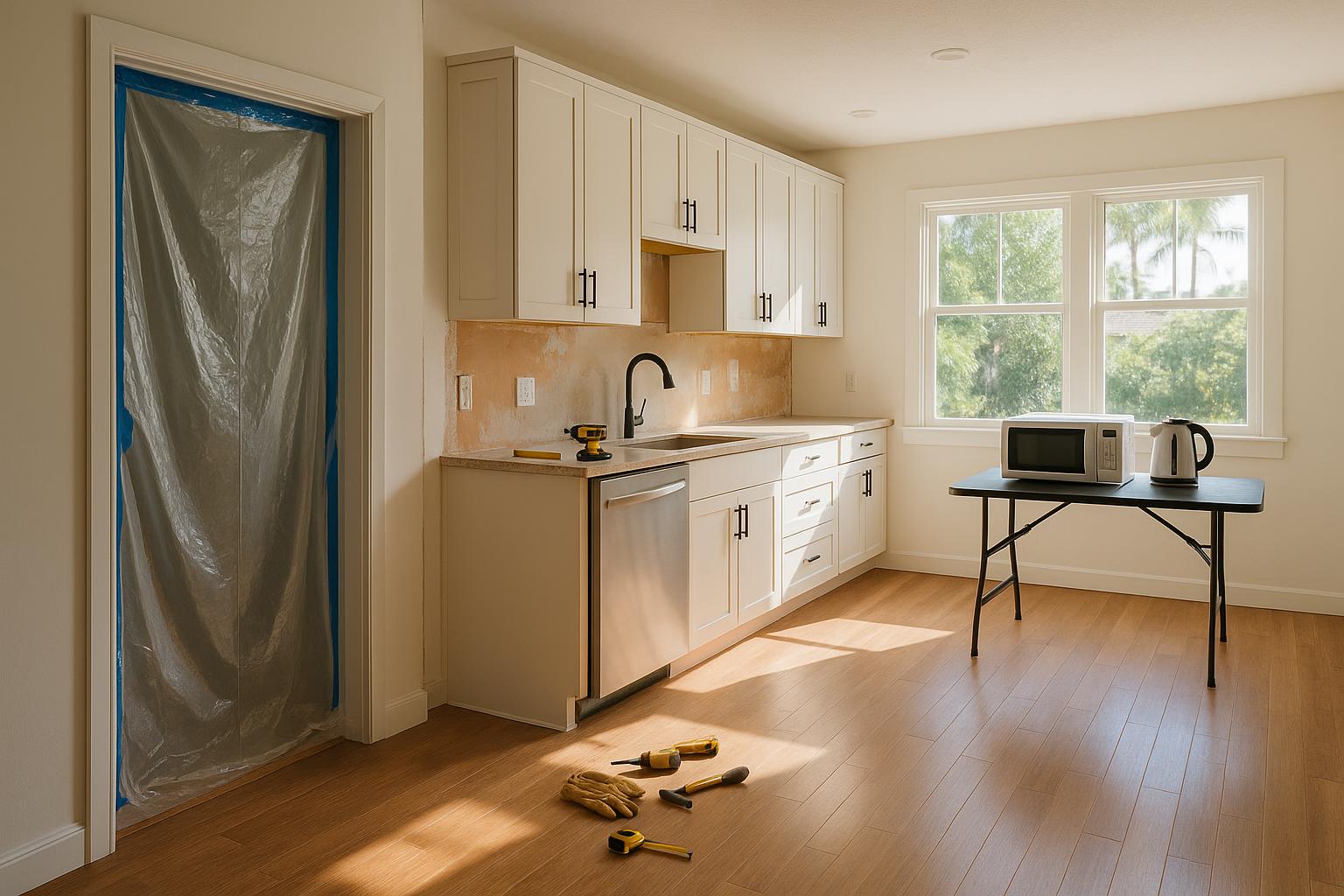
- Kitchen remodel: Set up a mini kitchen in your dining room or garage. A microwave, toaster oven, electric kettle, and a small folding table go a long way. Stock up on paper plates and disposable utensils to avoid washing dishes in the bathroom sink.
- Bathroom remodel: If you have a second bathroom, you're in good shape. If not, talk to your contractor about keeping the toilet functional for as long as possible during the project and discuss portable options for the short gaps in between.
- Whole home renovation: This is where it gets trickier. Your contractor should be able to phase the work so that at least one section of the home remains livable at all times. If the scope is too large, a short-term rental or staying with family might be the smarter call.
Protect Your Belongings and Your Sanity
Dust is the silent enemy of every remodel. Even with careful containment, fine particles find their way into places you wouldn't expect. Before work begins, take these steps:
- Move furniture, electronics, and valuables away from the construction zone.
- Cover items in adjacent rooms with drop cloths or plastic sheeting.
- Seal off doorways between the work area and your living space with plastic barriers and painter's tape.
- Ask your contractor about dust containment systems — a good crew will use them as standard practice.
In Miami's humid climate, dust mixed with moisture can settle on surfaces quickly and become harder to clean. Staying ahead of it makes a big difference.
Communicate With Your Contractor Daily
When you're living in the middle of a construction zone, communication isn't optional — it's essential. A quick five-minute check-in each morning can answer questions like:
- What work is happening today?
- Will there be any water or power shutoffs?
- What time will the crew arrive and leave?
- Are there any decisions I need to make today?
At Flintlock Foundation Contractors, we prioritize this kind of transparency because we know it makes the experience better for everyone. You shouldn't have to wonder what's happening in your own home.
Set Ground Rules Early
It might feel awkward, but setting clear expectations with your contractor before the project starts prevents frustration later. Things worth discussing include:
- Work hours: Most crews in Miami-Dade County work between 8 a.m. and 5 p.m. on weekdays, but confirm this upfront.
- Bathroom access: Let the crew know which bathroom they can use, or discuss portable facilities.
- Parking: If you live in a neighborhood with limited street parking — common in areas like Cutler Bay and Homestead — figure out where the crew and material deliveries will park.
- Pets and children: Construction zones aren't safe for curious kids or anxious pets. Plan to keep them away from the work area throughout the project.
Plan for the Noise
There's no way around it — remodeling is loud. Tile demolition, sawing, drilling, and hammering are part of the process. If you work from home, plan to use noise-canceling headphones or work from a different location on the heaviest demo days. If you have young children who nap during the day, coordinate with your contractor to schedule the loudest tasks during times that work better for your family.
Keep Your Eyes on the Finish Line
Living through a remodel isn't glamorous. There will be mornings when you step over extension cords to make coffee and evenings when you eat takeout on the couch for the third night in a row. But here's the thing — it's temporary.
Every day of inconvenience is one day closer to the home you've been dreaming about. A beautifully renovated kitchen where your family gathers. A spa-like bathroom that makes you feel like you're on vacation. New flooring that completely changes the energy of your home.
The discomfort is short-lived. The results last for years.
Work With a Team That Respects Your Home
The single biggest factor in how comfortable your remodel will be is the contractor you choose. A team that communicates clearly, cleans up daily, and treats your home like their own makes all the difference.
If you're planning a remodel in Miami and want to work with a team that makes the process as painless as possible, reach out to Flintlock Foundation Contractors. We'll walk you through every phase, answer every question, and make sure you actually enjoy watching your home transform — even while you're living in it.